Holding hands with the global Church
Our vision is to play our part in seeing the Whole Church taking the Whole Gospel to the Whole World; hand in hand with the global Church. So how do we engage in mission ‘hand-in-hand’ as part of the global Church?
Posted on 05 January 2026 by Jill Marrs


Recognising that mission is God’s initiative and a call to all who follow Christ, how do we as part of the Global Connections and MAP network engage in mission ‘hand-in-hand’ as part of the global Church, as reflected in the Global Connections vision statement? What might holding hands look like?
Hand holding with no agenda
It is November 1990 and I have been invited to a wedding. It is my first wedding in Kenya and I join some of the bride’s colleagues - nursing staff from the local hospital, in the back of a land rover and head off into the foothills of the Aberdare Mountains. We hadn’t gone far before a theatre nurse reached over and gently took hold of my hand. She and I held hands for the rest of the journey. There was no agenda. She was not afraid and needing reassurance, she was not bouncing around in the vehicle and needing steadying, she was not looking to give or receive help. She was simply connecting with someone else who was making the same journey and acknowledging that we were doing it together. In her culture it was perfectly normal to hold hands in this way, two ladies holding hands together.
What it meant was that when she wanted to share something with me above the noise of the land rover engine, I was already close. When we hit a stretch of uneven road I could sense the tension in her hand and she in mine.
When we hold hands across cultures, we might think of how we can address a need, respond to a crisis, bring resources and manpower, learning and skills. However what we understand as handholding may not be others’ understanding of handholding. So, we need to be prepared to hold hands in ways we might not expect.
Hand holding with nothing exchanged
It is June 1910 and in Edinburgh the World Missionary Conference has gathered twelve hundred delegates from mission societies and churches for ten days of discussion about mission. Over the previous century missionaries from the West have gone to the rest of the world, taking the whole gospel, to the whole world from the wholly missionised lands (that is, Europe, North America, Australia and New Zealand) to the lands not yet fully missionised (that is, the rest of the world).
This conference was seen as an opportunity to gather and consider the achievements made in mission and deliberate and strategise about how the evangelism of the world could best be completed within their generation.
The non-western delegates voices were few, only 18 out of the 1215 delegates, and all but one came from Asia. However, the response of one, Bishop V. S. Azariah, an Anglican priest from India challenged the resourcing, leading, directing route that mission was on. He did not ask for more resources of personnel, leadership, administration or finance from the west for the emerging evangelical church in India, ‘but for friendship, we ask for love, give us friends.’
The Church beyond Europe was asking for friendship. For love. To hold hands as the theatre nurse had with me, not to receive or give, but to acknowledge and appreciate the presence of the other.
Hand holding with nothing exchanged, just an appreciation of one another’s presence and being close enough to listen.
Holding hands in friendship
When Jesus talked about friendship he said: (John 15:12 – 14)
12 My command is this: Love each other as I have loved you. 13 Greater love has no one than this: to lay down one’s life for one’s friends. 14 You are my friends if you do what I command.
This means friendship can be costly. It is sacrificial, laying down power, time, agendas, to build familial relationship, as modelled and directed by Jesus.
Jesus who sacrificed heaven to take our hand as a fully human friend, Jesus who sacrificed His life on earth to offer a nail-pierced hand as the means of bringing us from death to life.
Over the past 115 years since the Edinburgh conference many church leaders across the non-western world have re-iterated the call for friendship rather than things. They have at times asked for a pause in the relationship – a moratorium on missionaries and financial support, because they needed space to assess the relationship, to find a way of holding hands that does not sit on a power gradient, to see what friendship looks like from their own perspective.
We in the West also need to pause and consider how we sacrificially hold hands in the global Church. To have relationships which do not seek to push or pull, give what is not sought and take that which is not ours to take. We need to recognise that when we hold hands we become one, we are joined and become us. Not them and us, just us. We need to acknowledge that all resources belong to Christ, who is also the one who commissions His people, people from all His global Church to go and make disciples.
Actions that follow as a result of holding hands in friendship
When Global Connections carried out its listening exercise, looking in and listening to members we felt we needed to connect, enable, explore and collaborate. As we hold hands in friendship as part of the global Church I suggest the following actions -
Lament - for the times we have refused to hold hands, ignoring the outstretched hand of the other, because they are not the right fit for our friendship, holding them at arm’s length. We lament that when we do hold hands we too readily take the lead, deciding for others what we believe is best for them, directing them where they may not want to go, resourcing them with materials which do not answer their heart cries, passing on our worldview, our resources, our theology, our language, without pausing to see if it is wanted or appropriate.
Listen - really listen, sacrificially listen to others’ voices, in others’ languages, not just to those speaking loudly, but to the weak, the quiet, the forgotten. Listen to people whose lived experience is different to ours, how has God revealed himself in their circumstances, what can I learn, how can I change?
Look at ourselves - instead of the other’s splinters deal with the logs in our own eyes. See our limitations, our weaknesses – our need of God and of our global Christian family. We need to critically examine our own culture, worldview and their influence and limitations, and how we have exported our vices – consumption and materialism, the stratification of society, commodifying people and undervaluing their work. We need to see how our comfort has blinded us to the discomfort of others, shaping our understanding of the Good News to be primarily about personal discipleship and thereby sidelining justice and liberty. In being well-resourced in mission we have made ourselves into donors – into people you come to for money and things, not necessarily people you come to for friendship.
Look at those we hold hands with - and not at their needs. Look at their uniqueness as part of God’s creation, His image that they bear, the salvation story they carry, the gifting they wish to share. God wants me to see my brothers and sisters in the global Church not as receptacles for my good deeds, but as part of His family.
Learn - in humility sit at the feet of the teachers who speak of Christ from a space I do not stand in, a space of persecution, pain, poverty, a space of perspective that sees the need for community, that has a greater sense of God’s transcendence than my western worldview offers. God wants me to learn from my friends in His global Church.
If we can hold hands as friends, one body, united in faith, yet diverse in its parts, as Paul describes and celebrates in 1 Cor 12, together the body of Christ becomes the witness to the world, that Jesus prayed for and is recorded in John 17.
May we hold hands as part of the global body of Christ in friendship with others in His family and in so doing witness unity in Christ to the world.
You can read Bishop V. S. Azariah’s 1910 address at https://rasmusen.org/special/Azariah.1910.pdf
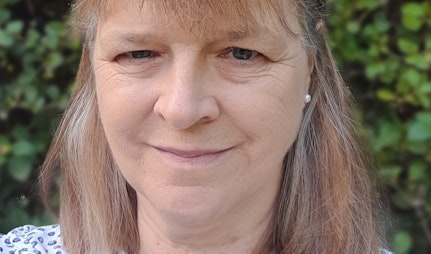
Meet the Author
MAP Administrator Jill has worked in the MAP office since 2017. She previously worked with EMBRACE NI encouraging local churches to engage with migrant people, and in Kenya as a partner in mission with the Presbyterian Church of East Africa, teaching, running a library and providing hospitality. Jill is interested in exploring new expressions of mission and in her free time is trying to learn Scottish Gaelic and enjoys building Lego constructions with her grandson.